
Extradition Treaty Between India: An Overview
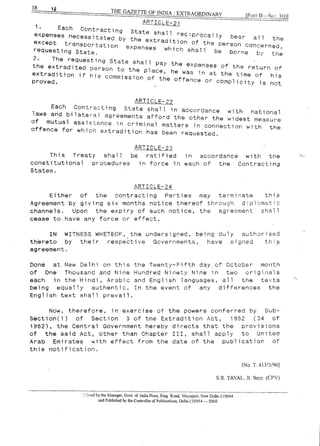
The extradition treaty is a crucial component of international law, significantly affecting how countries cooperate in matters of justice. Understanding the extradition treaty between India and UAE, for instance, provides insights into India’s approach toward international legal agreements. Such treaties govern the process by which one country may request the surrender of a suspect or convicted individual from another country to face legal proceedings or serve a sentence.
What is an Extradition Treaty?
An extradition treaty is a formal agreement between two or more sovereign states for the purpose of extraditing individuals accused or convicted of crimes. These treaties typically outline the legal framework for extradition, including the types of offenses that qualify, the legal processes involved, and the rights of the individuals subject to extradition. The importance of such treaties cannot be overstated, as they help to ensure that criminals cannot escape justice by fleeing across national borders.

India’s Extradition Treaties
India has signed extradition treaties with several countries to combat cross-border crime effectively. Some of the key aspects of India’s extradition treaties include addressing offenses such as fraud, drug trafficking, terrorism, and corruption. These treaties not only facilitate cooperation in criminal matters but also enhance bilateral relations between India and the other signatories.
Legal Framework in India
The legal framework governing extradition in India can be found in the Extradition Act of 1962. This act provides the basis for extradition requests and establishes procedures for handling such requests from other countries. Under this act, India has the authority to extradite individuals based on existing treaties or, in some cases, on the principle of reciprocity.
Additionally, India’s Constitution and various laws related to criminal procedure provide further guidelines on how extracts from these treaties are implemented. Notably, the treaty must specify that the crime in question is punishable in both countries, and there must be substantial evidence to justify extradition.
Key Extradition Treaty: India and the United States
One of the most significant treaties India has is with the United States. Although there is no formal extradition treaty, the two nations have cooperated extensively on various cases through mutual legal assistance treaties. High-profile cases have seen successful extraditions, demonstrating the growing collaboration in law enforcement.
Challenges in Extradition Processes
Despite the presence of treaties, the extradition process can be fraught with challenges. Legal hurdles, differing standards of evidence, and political considerations all play a role in complicating extradition requests. Furthermore, human rights concerns often arise, particularly when the individual facing extradition fears for their safety or the possibility of unfair trials in the requesting country.
Case Studies of Extraditions
There have been several high-profile extradition cases in India that illustrate both the challenges and the successes of the extradition process. One notable case involved the extradition of Vijay Mallya, a former liquor baron accused of financial fraud. His case raised numerous legal questions and garnered significant media attention, highlighting both the intricacies of international law and the public interest in justice.

Conclusion: The Importance of International Cooperation
Extradition treaties play a pivotal role in the global fight against crime. They represent nations’ commitment to uphold justice and maintain legal integrity across borders. India’s increasing number of extradition treaties signifies its proactive stance in combating crime effectively while fostering international partnerships. As global dynamics evolve, it is likely that India will continue to strengthen its extradition framework to address emerging challenges in crime and justice.
Future Considerations
Looking ahead, it is crucial for India to continue refining its extradition processes, ensuring that they are as robust and fair as possible. Addressing human rights concerns, improving legal cooperation, and adapting to new forms of crime will be essential in making these treaties effective tools for justice. Furthermore, as crimes become increasingly complex in a digital world, countries must work together to adapt their legal frameworks to manage such challenges for effective transnational justice.
